Tuesday, January 7, 2014


Bobby Gordon
1941 - 2013

   There are many adjectives that describe Bobby Gordon's clarinet sound…lyrical, haunting, delicate, passionate, impressionistic, poetic are some that immediately come to mind.  Bobby's playing included all of those elements, even in a single performance.

   Mentored by the great Chicago clarinetist Joe Marsala, Bobby achieved the same deep, woody tone that can be heard on Marsala's best recordings.  Bobby also paid close attention to the sounds of Jimmie Noone and Jimmy Dorsey, and he was one of the very best interpreters of Pee Wee Russell's music too!  Before joining Jim Cullum, Bobby played with many greats, including Muggsy Spanier, Eddie Condon, George Brunies, Wild Bill Davison, Bobby Hackett, Zutty Singleton and others.

   Bobby Gordon was the clarinetist with Jim Cullum back when the band was still called the "Happy Jazz Band."  During his tenure with the HJB, Bobby recorded several albums with the group, and all of them are highly prized by collectors today.  The late Wayne Jones, drummer and Jazz critic, once said that Bobby's recording of "High Society" with the Happy Jazz Band was his favorite of all the versions he ever heard.  That statement should not surprise anyone who is familiar with Bobby's playing when he was in his prime.  His sense of lyricism and dynamics, his ability to construct increasingly exciting choruses and above all his rich, beautiful sound were made to order for improvising on Lorenzo Tio's famous chorus.
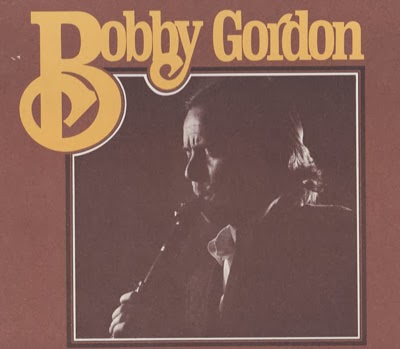

Photo courtesy of Bob Black

   After leaving San Antonio in the mid-1970s, Bobby toured with pop icon Leon Redbone, and eventually settled in San Diego, California.  There he married Sue--who would remain a loving and devoted wife for the rest of Bobby's life.  He played with small groups at a number of venues around San Diego County such as the Jazz Mine and the King Luis Inn, then settled in for a long stretch for a gig at Milligan's in La Jolla.  At Milligan's, Bobby fronted a quartet that frequently threatened to become a big band as so many musicians wanted to sit in with the master!

   In the late 1990s Bobby joined the Roadrunners -- a quintet organized by former Jim Cullum Jazz Band drummer Hal Smith.  The band, which also included vocalist Rebecca Kilgore, pianist Ray Skjelbred and bassist Mike Duffy, was popular for several years on the West Coast festival circuit.  During two appearances at the Sacramento Jubilee, they recorded programs for RIVERWALK.  Program #154 is a tribute to Eddie Condon.  Program #184 explores the compositions of Alex Hill.  Bobby also participated in a RIVERWALK broadcast called "Chicago Reeds," together with Ron Hockett and Kim Cusack (program # 157).  All of these broadcasts can be heard streaming, from Stanford University, by visiting http://rwj-b.stanford.edu.

   During this time, Bobby also played numerous festivals and jazz parties with Marty Grosz and groups variously designated as the "Orphan Newsboys" or "Destiny's Tots."  They recorded for STOMP OFF and JAZZOLOGY and also toured overseas.  Bobby made two recordings for AUDIOPHILE backing Rebecca Kilgore and also played in a seven-piece group assembled by Hal Smith for MUSIC MINUS ONE.

   Around 2003, Bobby began to suffer poor health, which limited his ability to play at festivals and on engagements that lasted more than a couple of sets .  He still made musical magic at events such as the Chautauqua Jazz Party, even though he was forced to play while sitting.

   When he passed away on Dec. 31, 2013 it was a tremendous loss -- for every musician and fan who enjoyed the beautiful, soulful clarinet of Bobby Gordon.

Wednesday, October 9, 2013

Bob Barnard: A Perspective by Jim Cullum


The iconic Bob Barnard, now 80, is a jazz master with no equal.  He climbed to this pinnacle early in his career and has held this exalted position for over 50 years.

Considering his preeminence, it may seem odd that with the exception of Australian intellectuals and niche jazz fans around the world, Bob is not well known.  And even though Bob's lack of world fame tends to derive mostly from those with holes in their blue jeans, it still lingers across populations in general.

Beauty is in the eye of the beholder, they say.  Or, "If this Aussie is really what you claim, Sir, I would know everything about him, down to the color of his underwear, and I've never heard of him!"

Contradictions such as this abound in the music business, and some of us chafe.  Ever since the 1950s, almost all popular music has been completely dominated by lyrics.  The few instrumentalists who have become well-known have tended to excel at displays of pyrotechnics or other gimmicks.

Bob is an older, white Australian who mostly stays home, does not sing, jump around or wildly entertain.  He just goes about his craft, pouring out magnificent pieces of art every time he puts the trumpet to his lips.  He bears the badge of the great players: an instantly recognizable personal style.

With a player like Bob, that personal sound is like a human voice.  Once you know the voice you know it forever.  And the most treasured of our jazz players have had this quality.  Further, within his personal style, Bob can play anything he can think, and he thinks of great things.

When we speak of the geniuses our music has produced during its 100-year history, almost all have found these "voices" by a great deal of working in the trenches, studying other great players and then heading for the woodshed and the bandstand.  Also, I notice that this kind of personal development has often happened in the provinces.

Bob Barnard began playing cornet in his parents' family band.  His older brother Len was the drummer, and Bob and Len went through a lot of their professional lives together.  Particularly in their early days, I think Len often pointed the way to young Bob.  And Len knew the depths of the music.

The brothers went jazz crazy.  That explosion sent them rocketing off into the jazz world.  Keenly intelligent, full of fun and wit, while at the same time deeply serious about their music, they would do anything, go anywhere for a gig.

Within a few years they were touring up and back all over Australia as "Len Barnard's Famous Jazz Band!"  There was work.  Jazz and dancing in the Post War Era flourished in Australia just as it was declining in the USA.

After a few years Bob moved from Melbourne to Sydney, began playing in studios, joined Graeme Bell, polished his art and emerged as a unique jazz figure whose brilliantly constructed improvised solos stand with the greatest of all time.

Copying no one, Bob was at first influenced by Louis Armstrong classics.  Later his playing took on some of the lyricism of cornetist Bobby Hackett.  The result contains the drive and abandon of Louis and the weaving up and down patterns and the golden rich cornet tone of Hackett.

This is overlaid by all the rest of it: the rest of Bob's own style, the voice of Bob's horn, so influenced by this long life as an Australian jazz man, his relationships with his family, friends, fans and voices from the past.

Bob Barnard, the musician, the artist is a world treasure.  I admire him beyond all the musicians I know.  It has been one of the great honors of my life to have toured and performed with him, recorded with him and to count him as a friend.

Jim Cullum
San Antonio, Texas USA
September 16, 2013

Sunday, September 1, 2013

"This Rhythm Section Will Not Be Repeated!"

Lionel Hampton
– by Hal Smith

Between 1937 and 1941, the great Jazz vibraphonist Lionel Hampton was featured on 23 sessions for the Bluebird label.  Though he played drums or piano on a few sides, the majority of the recordings feature his exuberant vibes playing.

Many legendary Jazz musicians participated on these recording dates, and some of the combinations are mind-boggling -- such as  one front line that consisted of Dizzy Gillespie, Benny Carter, Coleman Hawkins, Chu Berry and Ben Webster!

The rhythm sections on the Hampton sessions are equally impressive, with a variety of groupings including Charlie Christian, Jess Stacy, Sid Catlett, Allan Reuss, Sir Charles Thompson, Milt Hinton, Jo Jones, Nat "King" Cole, John Kirby and Cozy Cole.

One rhythm section in particular stands out; the group that recorded on Dec. 21, 1939: Joe Sullivan, piano; Freddie Green, guitar; Artie Bernstein, bass; and Zutty Singleton, drums.  This quartet was one of the most dynamic rhythm sections ever to be recorded!  They played with the power of a fast freight train, but with a wonderful instrumental blend.  The front line on this date was formidable too, and included three of the greatest reedmen in Jazz history: Coleman Hawkins (tenor sax), Edmond Hall (clarinet) and alto saxophonist Benny Carter -- playing trumpet!  Their playing deserves a separate blog, though the rhythm section managed to steal the show on this session.  Even Hampton's extroverted vibe playing takes a back seat to the powerhouse rhythm!

Joe Sullivan
Artie Bernstein
Joe Sullivan was a pioneer of "Chicago Style" Jazz.  He developed a unique, instantly recognizable style based on the influences of Fats Waller, Earl Hines and Louis Armstrong.  He had just left the Bob Crosby Orchestra and was freelancing in New York City when he got the call from Hampton. 

New Yorker Artie Bernstein was a member of the Benny Goodman Orchestra, and had played on two previous Hampton sessions (Oct. 12 and 30, 1939).


Freddie Green joined the Count Basie Orchestra in 1937.  He redefined the role of rhythm guitarist in a big band and his playing was a hallmark of the Basie sound.

Freddie Green
Zutty Singleton started drumming in New Orleans, made a splash in St. Louis, an even bigger one in Chicago, then moved to New York City in the late '20s.  His drumming style was propulsive and swinging; a perfect bridge between the Hot Jazz of the '20s and the Swing Era of the '30s.

Zutty Singleton
Without a doubt all these great players were at least acquainted with each other before the Hampton session.  And though they had not recorded together as a group, some of them had meet in the studio previously…

- Sullivan and Singleton with Billy Banks' Rhythmakers (Henry Red Allen, Pee Wee Russell, Eddie Condon, Jack Bland, Al Morgan) in 1932

- Sullivan and Bernstein with Benny Goodman and his Orchestra (Manny Klein, Charlie and Jack Teagarden, Dick McDonough, Gene Krupa a.o.) in 1933

- Green and Singleton with Pee Wee Russell and his Rhythmakers (Max Kaminsky, Dickie Wells, James P. Johnson, Wellman Braud a.o.) in 1938

- Green and Sullivan with Billie Holiday in a group that also included Lester Young, Walter Page and Jo Jones just a week before the Hampton date.  (The Holiday session produced sublime versions of "Night And Day," "You're Just A No-Account," "You're A Lucky Guy" and "The Man I Love").

As professional musicians, Sullivan, Green, Bernstein and Singleton would have been prepared for any musical situation and it is doubtful that they needed more than a brief run-through of the material -- if that -- before the masters were cut.  The first number recorded was "Dinah."  After a four-bar introduction by Hampton, the band immediately began swinging.  Sullivan's left hand, Green's even 4/4, Singleton's bass drum and Bernstein's big-toned string bass produced a rhythmic pulse that is breathtaking.


Next, the band made another attempt at "Dinah."  This performance swung harder, and once again, the rhythm section played with a controlled urgency.  Click HERE to view "Dinah" Take two.

"My Buddy" followed the second take of "Dinah."  Sullivan's playing was looser, utilizing chordal "vocalization" behind Hawkins' solo and triplets in response to Hampton's percussive solo.  As before, Green, Bernstein and Singleton played a driving 4/4 beat.


The final selection recorded that day was "Singin' The Blues,"  taken at a slower tempo than the classic Beiderbecke/Trumbauer recording.  Sullivan was the only rhythm man who was given a solo on the date.  He made the most of the opportunity, playing a lovely, sparkling half-chorus.  Green's guitar was very audible during the piano solo and, as usual, his sound and time are absolutely perfect.


It is tempting to theorize that on the first two sides, Joe Sullivan was playing a sparse, "Basie" style, to fit the flowing 4/4 of the rhythm section.  However, when he recorded with Green, Page and Jones the previous week, he played his usual style and it was a great fit with the "All American Rhythm Section."  On the Hampton recordings, Sullivan was most likely simplifying his style and cutting back on the treble licks just to stay out of the way of the vibes.

Zutty Singleton was an inventive and exciting ensemble player and soloist, though on this session he also played as simply as possible; mainly quarter notes, using brushes, on the snare drum and ride cymbal plus his signature pulsating bass drum.

Sullivan, Green, Bernstein and Singleton brought together the geographical influences associated with Chicago, Kansas City, New York and New Orleans and blended everything into a distinctive, hard-driving approach to swing.  This writer has never found any additional recordings -- live or commercial -- with the same rhythm lineup, so it must be assumed that this was their first and last time together in a studio!  The fact that this was a "one time only" rhythm section is a real shame.  But we can be thankful that they had this one opportunity to record, and they played with joyous abandon -- almost as if they knew that "This Rhythm Section Will Not Be Repeated!"

Thursday, June 6, 2013


Gilbert Charles "Gib" O'Shaughnessy - San Antonio Jazzman 
(Apr. 12, 1904 - Feb. 10, 1989)

by Donald Debner (Castroville, Texas) -- Nephew of Gib O'Shaughnessy

Gib O'Shaughnessy loved music from the start.  It was in his blood.  His father led the annual St. Patrick's Day Parade while dancing Irish jigs.  (But his father couldn't carry a tune in a bucket, according to Gib's sister Katy).  Gib also did the jigs, along with his younger brother Emmett.  Sometimes the three performed as a trio.  Gib wanted to play music, so he learned to play the clarinet at age 16.  This led to his career as a musician and a life filled with music he shared with everyone he met.

Gib was the seventh of eight children of Gibert Ryan O'Shaughnessy and Mary Hansberry.  Gilbert Ryan was straight from Ireland, arriving in the U.S.A. around 1878; Mary was another generation removed from Ireland, her folks having come through Mobile, Alabama.  The O'Shaughnessys were the typical struggling family in San Antonio, Texas where Gib was born.

The music bug bit Gib hard.  Jazz music was in its beginning stages and it intrigued Gib when he heard it.  He recalled in later life that he was fascinated by the blues and wanted to play nothing else.  But he just loved music anyway and wanted to play it even if it meant leaving home and suffering the disapproval of his parents to do it.  His first real musical job was in 1922 when he went to Tampico, Mexico with a small group of musicians.  When they returned to Texas he stayed in Tampico.  There he met "Ham" Crawford, who played in Larry Conley's orchestra.  (Conley later became a songwriter and was the lyricist for "A Cottage For Sale," published in 1929).  Gib joined the orchestra and stayed with it after Crawford took over from Conley.  This group returned to the states and played throughout East Texas and Arkansas.

Gib joined Peck's Bad Boys around April, 1923 at Peck Kelley's invitation.  They were playing at the Garden of Tokio Ballroom in Galveston.  Peck Kelley was an influential jazz pianist in Houston who rarely ventured away from his home city.  His band was one of the best of the early jazz bands.  Jack Teagarden (trombone) was already a member of Peck's Bad Boys.  He and Gib may have known each other in San Antonio in 1921 0r 1922 because they both played in local spots before Jack moved to Houston.  (Jack had to leave San Antonio in a hurry because he was a witness to a shooting at the place he was playing; he was afraid the shooters were after him to silence him).

Gib and Jack became good friends while they were playing together.  They were close in age and experience (Jack was born Aug. 20, 1905) and both had family in San Antonio (Jack in later years).  The friendship was so close that one of Jack's sons was named after Gib.  Gilbert Teagarden was the son of Jack and Dee Ora Teagarden.  Dee Ora lived in McQueeney, Texas until her death at age 97 in 2001.

Gib was later with Marin's Southern Trumpeters, which included Teagarden and Terry Shand (piano).  They went on a four-months tour during the summer of 1924 that ended in Mexico City.  They returned to San Antonio to play at the Winter Garden on October 8.  It was at this engagement that Gib was asked by Jimmie Maloney to play in his orchestra, known as "Jimmie's Joys."  But Gib decided to stay with the Trumpeters for a gig in Ohio.  That turned into no job, so they returned to Texas and Gib decided to join the Joys.  This was probably October 18, 1924.

Jimmie's Joys had its start in Austin, Texas in 1921 and played at Galveston's Joyland Park during the summer of 1921.  Then the band performed around Texas and across the South.  The name Jimmie's Joys became so well known that Maloney legally changed his name to Jimmy Joy in 1927.  In 1924 the band was hired as the house band at the St. Anthony Hotel in San Antonio.  While there the band broadcast on WOAI twice a week.  The Joys started out as a hot jazz band with no formal arranger.  All band members contributed to head arrangements, learned from the sheet music and records and committed to memory.  during their time at the St. Anthony they performed the old jazz standards but moved closer to straight dance music.

In October 1924 Gib recorded with the Joys in Dallas for OKeh Records.  By this time he had learned to play the alto and tenor saxophone and played them on recordings.  In April 1925 the band was given time off from the hotel to travel to Kansas City for a recording session.  They made numerous one-night playing stops along the way.  In Kansas City they recorded on May 13 and 14.  Gib had several clarinet and alto solos.  Additional recordings were made in Dallas in October 1925.  On Feb. 20, 1926 the Joys closed their 19-month engagement at the St. Anthony.  They opened March 1 in he Crystal Ballroom of the new 18-story Baker Hotel in Dallas.  The Baker opened its swank Peacock Terrace Roof Garden on May 31 with the Joys providing music.

The Joys broadcast live from the Baker on WFAA on Monday, Thursday and Saturday at 2:30 and 6:30 p.m.  Included inn the broadcast was the vocal trio "Pick, Shovel and Spade" composed of band members Gib, Clyde "Fooley" Austin and Earl Hatch.  The band left the Baker in November, went on tour, then returned to the Baker until Dec. 28, 1926.

Next was the Brown Hotel in Louisville, Kentucky in January.  They stayed six weeks and broke attendance records.  The band returned to Texas for a tour, then back to the Brown and a performance as the official Kentucky Derby Orchestra, which they did for three consecutive seasons.  There were more tours, including a month at Peachtree Gardens in Atlanta, Georgia.  In the Fall of 1927 they returned to the Brown.

There was a recording session in March 1928 in Chicago for Brunswick Records.  Another session took place in May.  Next was an engagement at the Muehlebach Hotel in Kansas City until Oct. 7.  Beginning in 1930 other long engagements took place at hotels in St. Louis, Oklahoma City, Denver, St. Paul, Pittsburgh, Memphis, Milwaukee, Shreveport, Philadelphia and Chicago.

The Joys left for San Francisco in March 1932 to play at the Bal Tabarin Night Club.  In July they made their way back east.  One of the stops was at Sylvan Beach near Houston.  At this point Gib decided to leave professional music.  While at the Bal Tabarin he had married Marion Hayden of San Francisco.  She didn't care too much for the music world, so they returned to the West Coast where Gib began working in his father-in-law's butcher shop.  After a year or so in this work Gib went to work for Standard Oil in California, eventually becoming a sales representative.  He retired from the company in 1977.

But Gig didn't retire from music; it was too much a part of him.  After leaving the Joys he played most of the time in a non-professional status whenever the opportunity arose.  He played at social events, fund raisers, family gatherings and other times when people wanted music.  He became an entertainer also, telling stories and jokes to go with the music.  This suited his outgoing and cheerful personality.  He especially did an impersonation of musician Ted Lewis, whose big songs included "Me and My Shadow."  Gib went exclusively to his clarinet for his later years of music-making.  He also did paid gigs from time to time.  One gig in later years was a cruise to Hawail where he was asked to join a group of young musicians to provide music for the cruise.  Gib said he had a great time on that job.

Gib and Marion always lived in the San Francisco area.  Their later addresses were in Belmont and Burlingame.  They had no children.  Marion died in 1975.  Gib died Feb. 10, 1989 of Legionnaires Disease in San Mateo.  They are buried at Holy Cross Cemetery, Colma, California.

Here is a summary of Gib's musical career:

1921 - 1922: Local music spots in San Antonio
1922: In Tampico with Dwight Bourn (piano); Dee Orr (drums); Merrill Doyle (C-melody sax)
1922 - April 1923: Larry Conley's Orchestra
April 1923 - 1924: Peck's Bad Boys
1924 - October 1924: Marin's Southern Trumpeters
October 1924 - July 1932: Jimmy Joy's Orchestra 

Monday, April 29, 2013

Piano Man

The spirit of Earl "Fatha" Hines has been hovering around the Jim Cullum Jazz Group for quite awhile…


A couple of weeks ago, we played "You Can Depend on Me" at Bohanan's.  Pianist John Sheridan added a sparkling right-hand tremolo on his solo chorus, then looked up and smiled as he said, "Why not?  It's a 'Fatha Hines' tune!"  A few nights later, Jim mentioned hearing the 1940 recording session by Sidney Bechet -- which also included Hines, Rex Stewart, John Lindsay and Baby Dodds -- for the first time.  He marveled at the interplay between Earl Hines and Rex Stewart and enthusiastically exclaimed, "Man!  It sounded like Hines and Louie on 'Weatherbird'!"

Last weekend, our friend David Boeddinghaus filled in for John at the Boardwalk Bistro and on a concert in Schertz (a small town just north of San Antonio).  David was in full-on Hines mode and his playing was full of ringing tremolos, "trumpet-style" single-note lines and the same kind of suspended and broken left hand patterns that characterized Hines' playing.  We were all grinning ear-to-ear as amazing sounds continued to emanate from the keyboard.  Time after time, Jim yelled "Go on, David!  Take another one!  Take another one!"  He obliged, and each solo chorus was more fantastic than the previous one.  After David returned to New Orleans, Jim told me "I sure like Earl Hines, filtered through David Boeddinghaus!" 

Jim has experience with the real thing, too.  In 1971, as then-owner of AUDIOPHILE records, he recorded Hines' tributes to Louis Armstrong, Hoagy Carmichael and W.C. Handy over a two-day span.  Later, Jim assembled an all-star group consisting of Hines, Joe Venuti, Bob Haggart and Ray Bauduc to perform at the "World Series of Jazz" in San Antonio, opposite the Happy Jazz Band (the predecessor of the Jim Cullum Jazz Band).

In May, 1990, the Jim Cullum Jazz Band, with guest pianist Dick Hyman, recorded a broadcast entitled "Piano Man: Earl Hines, The Father Of Modern Jazz Piano" for the  RIVERWALK program.  The band's regular pianist, John Sheridan performed alongside Hyman on the broadcast.  He recalls that not long before the Hines show, a program was recorded that featured the intricate music of pianist Bob Zurke.  John said, "The Zurke show was a picnic compared to the Hines!"  (Zurke played "contrary-motion" bass and treble lines and busy, syncopated figures in the melody but none of it is nearly as complex as a typical Hines performance)!

I asked Dick Hyman for a description of Earl Hines' playing.  Dick's reply was as concise and accurate as he is on the piano:

Earl Hines broke with the ragtime-stride tradition by basing his playing on what single-note horn players, in particular Louis Armstrong, were attempting  in the 1920s. He translated their horn-playing phrases  into pianistic octaves and occasional filled chords, interrupting the regularity of  the stride left hand with sequential tenths and single note punctuations, while his dazzling right hand runs anticipated [Art] Tatum and [Teddy] Wilson. I’ve entertained the notion, though it’s perhaps a stretch of thought, that Hines’ playing in its individuality might be compared to that of Jelly Roll Morton, though Hines’ keyboard technique was far fleeter, and his ideas more “modern.”  I suspect, too, that neither pianist would have appreciated the comparison.

As a side-note to Dick's last comment, David Boeddinghaus mentioned that he visited one of Hines' disciples -- Jess Stacy -- in Los Angeles in the late 1980s.  Stacy remembered a late-'20s visit to the Sunset Cafe' in Chicago where he was paying rapt attention to Hines' performance.  Suddenly he felt a tap on his shoulder, and turned around to see Jelly Roll Morton standing behind him.  Morton pointed to Hines and said to Stacy, "Son, that boy can't play piano!"  Jelly Roll Morton was a Jazz icon, but it is a safe bet that several generations of Jazz pianists would disagree with his assessment of Hines' talent!

One of the songs performed by Dick Hyman, John Sheridan and the Jim Cullum Jazz Band for the Earl Hines program was "Piano Man," which was originally recorded by Hines' Orchestra in 1939.  There is a band vocal, which includes the refrain "Swing it, Fatha Hines!"  Everybody did swing -- on the original recording as well as the broadcast!  The RIVERWALK program can be heard in streaming format at http://riverwalkjazz.stanford.edu/.  ("Piano Man" is program number 228).  And if you are as enamored of Hines' music as this writer, be sure to order a copy of Limited Edition Box Set number 254 "Classic Earl Hines Sessions 1928 - 1945" from www.mosaicrecords.com.

-- Hal Smith


Sunday, March 31, 2013

Mr. Rhythm

   Jim and I have not changed our positions on Artie Shaw vs. Benny Goodman.  However, when the discussion heats up, we do have an arbiter: Genial John Sheridan, who knows every note of every part in every arrangement ever played by Shaw and Goodman.  John will listen to the conversation, then respond with "Shaw's record of ("xxx") is hard to beat, then he will sing the melody of an arranged passage or solo exactly the way it was played.  Or -- he might say, "Well, Goodman's 'Walk, Jenny, Walk' is what inspired me to listen to this music."


   However, one thing that Jim, John and I agree on: Freddie Green was KING OF THE RHYTHM GUITAR!  Today, Mar. 31, is Freddie Green's birthday -- so it's only appropriate that we pay tribute to his inestimable contributions to Jazz… 

   From the very first notes he played on an early Count Basie broadcast ("I'll Always Be In Love With You," from June 30, 1937) it is obvious that Basie's "All-American Rhythm Section" was a force to be reckoned with.  Green floated atop a phenomenon he described as "The Rhythm Wave" with piano, acoustic guitar, bass and drums locked in, and focused entirely on generating an unstoppable swinging feel.  Eventually, Green's unadorned 4/4 became one of the hallmarks of the Basie sound.  In the late '30s, Basie, Green, bassist Walter Page and Jo Jones swung mightily, no matter what type of material was being played or sung.  Later Basie rhythm sections had a totally different feel, with less-is-more piano plinking, modern bass lines and aggressive drumming.  But through it all, Freddie Green kept a pulsating rhythm going.  Thick strings, high action and a series of b-i-g bodied guitars compensated for the lack of an amplifier and the strum of his Gretsch, or Stromberg, could easily be heard over the loudest Basie orchestra in full cry.  The pulse went right through you, to paraphrase Eddie Condon, "like a triple bourbon."

   With all the emphasis that has been put on his rhythm playing, it is easy to forget that Freddie Green was also an excellent soloist.  He took lessons from the marvelous guitarist Allan Reuss, and in 1938 actually soloed on record ("Dinah," with Pee Wee Russell's Rhythmakers).  In later years, Green traded fours with the Basie brass on Thad Jones' "The Elder" and of course "Li'l Darlin" would not have sounded the same without the signature guitar glissando that began each four bar phrase at the beginning of the song.  Fortunately (or not), the Basie rhythm section required a straight, unaccented 4/4 on the guitar rather than inventive solo flights.

   Veterans of the Basie band recall that Freddie Green interacted well with veteran musicians (and of course the orchestra leader) but was taciturn to the point of rudeness with younger players.  But by the 1980s, Freddie Green had paid a lifetime of musical dues, pioneering a style of rhythm guitar playing that is still held in the highest esteem by musicians and fans alike, around the globe.  He may have just decided to let his guitar playing do all the talking.

   In San Antonio, whenever the discussion turns to rhythm guitar for our band, we can depend on Jim to say, "I want FREDDIE GREEN!"  No argument there, Jim!  Not from me, not from anyone.  Who wouldn't want that wonderful, subtle, swinging pulse to be the sparkplug of their rhythm section???

   Happy Birthday, Mr. Rhythm.  Wish you were here!

    -- Hal Smith

For more information regarding Freddie Green, including rare photos, recordings, transcriptions and interviews, visit www.freddiegreen.org.

Thursday, March 7, 2013


COMING SOON:

New "Blogs Hot" by Jim Cullum, Hal Smith and others!


Tuesday, April 19, 2011

Shaw vs. Goodman: After 73 years, we’re still arguing!

by Jim Cullum

Hal Smith, esteemed jazz drummer, is clearly one of the great experts on the origins of jazz. He knows a lot about it and he knows a lot about how to play it.

Hal Smith

“You really prefer Shaw to Goodman?” he quizzes me. He knows in advance that he has a fight on his hands.

Artie Shaw and Benny Goodman

Let me tell you, I think that these arguments, so common among jazz nuts, are mostly hot air. Hal prefers the Coca Cola. I’ll have a Pepsi, please! Most of the time, that’s how silly this stuff is. But, for old time’s sake, we go at it.

Shaw vs. Goodman! Of the two, Shaw thrills me more.

“No comparison!” I say, “Shaw wins in all the ways I can measure.”

Hal fires back, “How could you measure so that you prefer Shaw?” He lists numbers of Benny’s early recordings.

We might go on like this for days – especially if we are on the road.

Swing Crazy Kids

The Shaw vs. Goodman battle was first waged by the jazz weirdoes during the late 1930s. A tidal wave of jazz, newly re-packaged as “Swing” had young Americans by their throats. A performance by one band or another would ignite passions never known before in American music. The jazz camps lined up. The excitement about Shaw and Goodman caused one of the biggest battles. Mainly Benny won out. He was the most popular of all swing-era figures and generally he eclipsed all other clarinetists.

However, Shaw began to challenge Goodman’s preeminence, and between the two of them, a high water mark of jazz clarinet performance was set.

Goodman and Shaw

For my money, no one ever played the clarinet more beautifully than Artie Shaw. As much as I admire Benny, here are reasons I admire Shaw more:

1) Shaw’s tone is a little darker – I think it is more mellow and richer and more interesting than Benny’s. In a few words, Shaw’s tone is unique, recognizable and gorgeous. 2.) Shaw is more careful about picking out the most interesting notes. This may be small potatoes, but I don’t think there are quite as many surprises in Benny’s playing.

When you listen to Shaw, think of Bix and listen that way. Shaw’s sound is special like Bix’s and he doesn’t waste many notes. He is like Bix in telling the story. Somehow the Bix influence is in there. Maybe it is accidental. But I suspect that Shaw had been very impressed by Bix. Both Beiderbecke and Shaw had special tones and both tended to find unexpected patterns.

Shaw had heard Bix play at his peak. He was amazed by the sound. “The whole horn vibrated,” he said.

A few years later Shaw roomed with Bix for a while.

After another 60 years, an aging Shaw attended the Bix Beiderbecke Jazz Festival at Davenport, Iowa. He discovered that the Beiderbecke home where Bix was born and had grown up was becoming dilapidated and the roof had failed. Shaw began to yell about the condition of the house.

In the end, the whole place was well restored. This was a big deal. To the hardcore devotee, the Beiderbecke house is a Mecca.

Bix Beiderbecke - classic photo

I suggest that when you listen to Shaw, listen to the similarities to Bix.

Shaw possessed and often displayed more technique than Bix. But don’t let that confuse any point about their similarities.

Goodman, also considered a kind of genius by many, swung just as hard. His playing was always perfect, flawless.

But Shaw is where a special, individual art lies. Listen to Shaw that way and see what you think.

Great though it is, I do not recommend another round of “Begin the Beguine.” Rather get into Shaw in depth. There is a huge wealth of recorded material, and Shaw, who retired early, was always at the top of his form.

“So if you’re so smart,” Hal asks, “who are your fingers-on-one-hand favorite jazz musicians?” You know the bit − whose records do you take with you to a desert island, when there can only be five artists?

I am ready for him. “Here you go,” I say. And I toss them off, for I have played this game for a lifetime: “Armstrong, Beiderbecke, Bessie Smith, Artie Shaw, and there is a 10-way tie for 5th and last place.”

“That 5th place is a cop out,” Hal says.

“Why are you worrying about my 5th place, anyway? We’re talking about Goodman and Shaw. You go figure out your own 5th place choices.” This is the way these jazz arguments have been going ever since Buddy Bolden, having finished with the waltzes and schottisches, came on with a slow, grinding blues.

There are some strong similarities in the Shaw/Goodman comparison. 1.) Both were unique and brilliant musicians. 2.) They were eccentric in the extreme. 3.) They were driven by their egos and their talents and the clear rivalry that was between them. 4.) They took great advantage of the rising tide of the swing era to carry the form to a high art.

If you can find it, try the double CD set of the Artie Shaw “At the Blue Room, At the CafĂ© Rouge” air checks. To my ear, big band swing just does not get any better. Shaw’s hands are all over this stuff. He wrote or directed the writing of the arrangements. He set standards for solo quality. The result: everyone in the band absorbs much of Shaw’s taste, and solo notes are not wasted. Ensemble precision is amazing. The rhythm section, with young Buddy Rich on drums, is as good as it gets.

If you do find this CD, I suggest that you experiment with turning down the high frequency response. In the transfer from LP to CD, the audio has become a little too edgy to be faithful. But I think you’ll like it – really like it!

I enjoy this size band too: four rhythm, three trumpets, two trombones, four saxophones, plus Shaw (14 pieces in all). Benny’s band had the same instrumentation.

I never cared as much for the later swing bands – often with nine brass, five reeds and usually only three rhythm.

If you hear a swing band today it is usually extra large and more about volume than it is about swing. Often you will see 20 mikes on a band already loud enough to peel the paint. Rock starts to creep in on some numbers.

Or, sometimes there is the other extreme − moo cow, slavish imitations of Glenn Miller.

Of course it would not be impossible to create a swinging band like Shaw’s. But it would take an obsessed genius like Shaw to drive it. And the market is not there. To realize full potential, a band like this must actually work every night for hundreds of nights.

Jim Cullum


PS. A tip-

The other night I saw a movie, “Dancing Co-ed,” starring Lana Turner and Artie Shaw. The movie is terrible, but Shaw plays a lot, and his playing is magnificent. You can find all this on your computer. I can’t − I am computer challenged. But you can find it, you lucky dogs!


Monday, December 6, 2010

Exponential Change

A lady I know has cats under her house. She makes no attempt to neuter or spay them. They constantly produce new litters of cats.


For the moment, they are just under the house, not bothering anyone. The lady gives them some food every day.


If things continue this way the multiplying cats will, in about five years, increase from two cats to about 5,000 cats. This is a pretty good example of exponential growth. Eventually, the smell will take over and the house may begin to rock on its foundation.


Here in the U.S. we depend on serious growth. We just gotta have it. Without it all the wheels really start coming off, as in the current recession. For most of our history, we have been able to grow and grow.


Generally, the vast majority of our citizens have wanted as much growth as we could wring out. Damn the torpedos!


And with exponential growth comes exponential change. Here is a tiny example you might enjoy:


Eloise


The other day, I took my granddaughter Eloise for an ice cream cone. Eloise is three years old. These days, as you know, getting her in the car requires strapping her in a plastic chair which must first be strapped in the back seat. So I drive to my daughter's home, where I must remove a car seat from the back seat of one car, take it back home and install it in still a third car.


I am gadget-challenged. There is a learning curve that sets in. So, I have a hard time getting the child seat properly anchored in the back seat of the car. Most people have no trouble at all.


The next step is to get Eloise into the thing and she has grown a little large for the chair I am using. To make it all go I must get in with her and squeeze with everything just short of putting my knee on her.


I am thinking the typical things such as, "The guy who invented that chair should be condemned to a lifetime of struggling with them." (This as his punishment).


Ah, these gadgets. You will remember when the Wizard of Oz is finally revealed to be a funny old snake oil salesman, and he accidentally pre-launches in the helium balloon -- "Come back! Come back" Dorothy yells, and the Wizard leans out over the basket: "I can't, I can't," he says. "I don't know how it works!"


Finally we do make it to the ice cream store, get Eloise out, get the ice cream, make a mess of it, get her back in--sticky this time--get her home, undo the seat, get Eloise and the seat in the house, get wet cloths, wipe Eloise off--the car seat, too, and the whole ice cream ordeal is finally over.


In early 1948, at age six, I moved with my family to Caracas, Venezuela. We lived there for two years.


If I pleaded, my mother might drive me to downtown Caracas to have an ice cream cone.


She would say, "Okay, get in the car and I'll be along," and pretty soon we would take off. I would stand on the front seat next to her.


The car was a one year old 1947 Ford four-door sedan. As we cruised through the Caracas streets she, with complete ease, would, in her high heeled shoes, work the clutch, brake and gas pedals, steer the car, and make hand signals out the window with her left arm. The car was not equipped with turn signals. She would shift gears with her right arm and hand. When she came to a stop sign or a red light, she would extend her right arm out to the right to keep me (standing on the seat) from falling into the dashboard! Through all this she would casually smoke a cigarette!


This must seem absurdly dangerous, particularly to anyone under 50. But, we all rode around this way all the time. Everyone's mother held her right arm out to keep the children from sprawling into the dash. And cars had no seat belts.


Caracas in the 40's


However, there were no freeways. That was one of the huge changes started by the war. The country was transformed in many ways. Before the war, two-thirds of Americans lived on farms or in small towns. The cities were smaller. There was one car per family, not one car per person, and generally, cars were driven more slowly. Much of the time, people walked. (As a result, obesity was minimized). Our mothers were quick on the draw.


But now, get ready in the change department! You are going to see so many changes going faster and faster. The change rocket ship is just starting its blast off.


One theory, outlined in a recent book, The Singularity is Near, by Ray Kurzweil, attempts to measure the rate of this exploding change and more or less predicts that soon we'll arrive at a singular point when we will be largely able to fix all of our problems. This assumes we won't blow up the planet in the meantime. Ray is saying that we are closer to a new technical "big bang" than most of us realize. a lot of this is about computers and chips and how powerful they are becoming and this very rapidly. I recommend Ray's book.


Isn't it nice, however, to have some things, like the jazz band, around where almost nothing changes? We are still using some of our original 1963 arrangements. The band is still mostly a seven-piece ensemble. The only change that has occurred during the last 48 years is that the band is better! The most recent additions, Hal Smith, drums, and Steve Pikal, bass, have added more swing and power to the Rhythm Section.


Unlike the rest of the world, we in the band have stubbornly avoided electronics. You hear the real sound -- not one that has been filtered through microphones and speakers.


There is no reverberation system -- no amp on the bass, etc.


When your head is spinning with data overload, and you are cursing your computer, close the laptop and come to the Landing We will fix you up!